
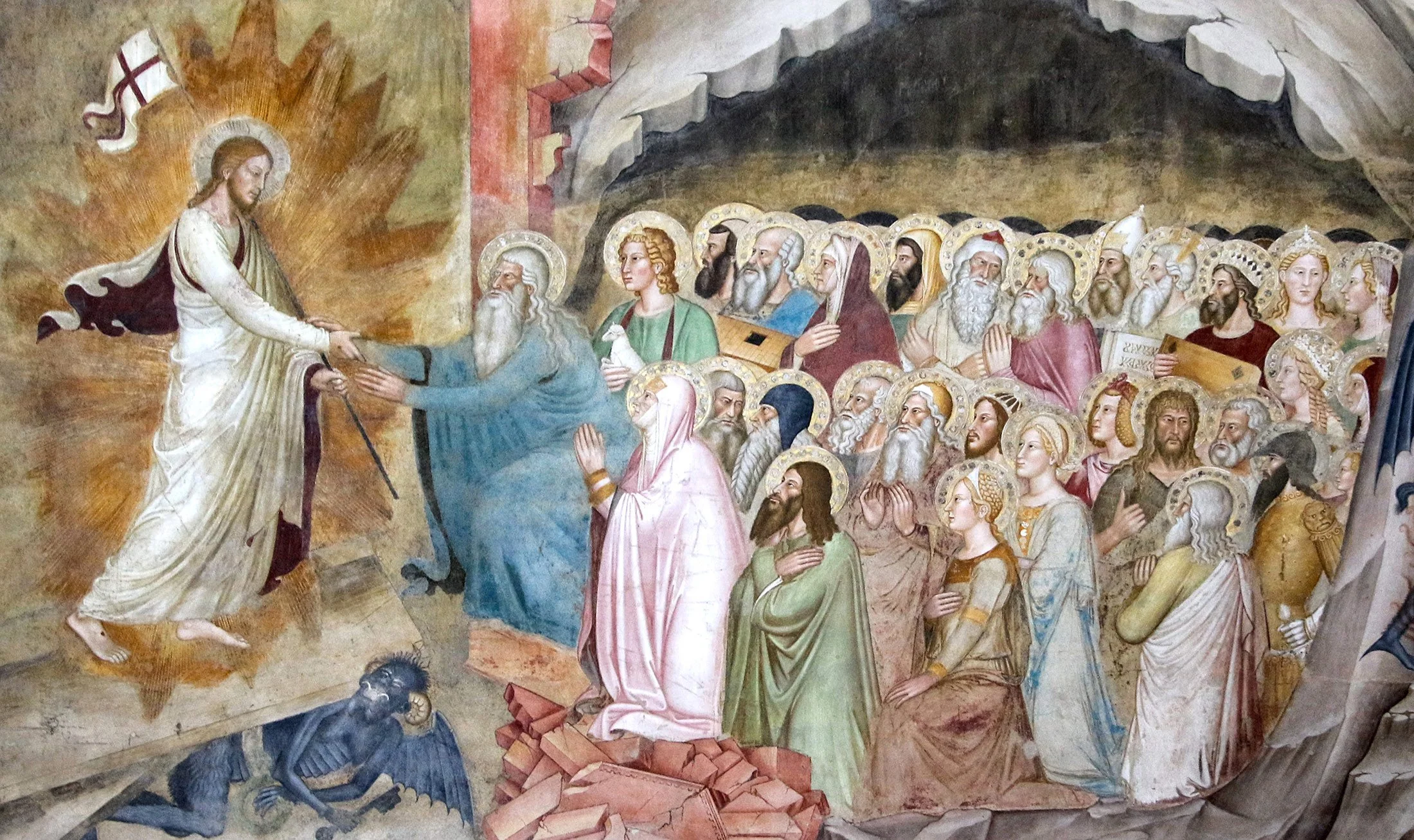
He Shattered the Doors of Hades
By Fr. Matteo Invernizzi, F.S.C.B.
March, 2026
A few weeks ago, a middle-aged man named Tom asked me for an appointment. When I finally met him, I learned he had been the director of a funeral home for almost a decade. Coming from a Protestant background, thanks to a relative, he began to get interested in Catholicism, and so he wanted to meet a Catholic priest to explore the possibility of his conversion.
At the end of our conversation about the differences between the Catholic Church and other denominations, I asked him a question that has been with me for a long time: “What is the difference between celebrating a religious funeral and a non-religious one? How do people participate in them?” I was sure he had seen plenty of both, and so I wanted to pick his brain about it. His answer was very insightful: “Non-religious people tend to focus on celebrating the departed's past life. They focus on sharing stories, pictures, and funny moments of their lives together. Religious people instead tend to shift their attention more to the divine, to the presence of Christ, and the promise of the afterlife.”
I found his answer very interesting, so I asked him: "Shouldn't we just celebrate both?" The gift of life, the beautiful moments, all embraced as signs of God’s love throughout our entire life? Isn’t it too little to postpone peace, joy, eternal life, only at the end of a journey, creating a separation between this life and the afterlife?
Pope Benedict XVI reminded us many times in his homilies that with His Resurrection, Jesus broke down once for all the doors of the netherworld; there is no more separation between life and death. He keeps the door open, standing victorious on the breach. Eternity flows into our lives every day, whenever we let the Holy Spirit bring life to us. The fight with death, with selfishness, pride, and envy, is a daily fight that we endure with the grace of Christ’s victory!
When we celebrate a Catholic funeral, we should always acknowledge and appreciate the life of the faithful departed. Every little moment of joy, every sport they loved, the music, the art, friendship, and traveling. They were all moments when their souls were searching for God, asking to experience a bit of heaven here on earth. At the same time, we must acknowledge their suffering, the sacrifices, the unselfishness, and the hard decisions made to support their families and their children. In everything they imitated Christ and His passion, they already experienced a foretaste of His resurrection.
A Catholic funeral teaches us not to shy away from the mystery of death. Quite the opposite: because of the resurrection of Christ, we can look straight into the mystery of suffering and the end of death. We do not know many things, but we know that we won't be alone in the final moment. Recently, a Nativity family shared with me some memories of the last day of their beloved mother. She held onto her Rosary, praying with her beloved ones around her bed and letting their prayers accompany her during the last moments. Her answer to the fear of death was to grasp the Rosary more firmly, the sign of her faith in Christ and his Blessed Mother.
To live and celebrate a Christian death means to affirm that the Resurrection of Christ happens in every single day of our lives. This is why, in praying the Hail Mary, we finish the prayer saying, "pray for us sinners, now and at the hour of our death."
